Notes on an Autistic Protagonist
 In 1826, novelist Ann Radcliffe defined the main characteristics of Horror fiction as terror, the mounting dread that takes place in anticipation of an event, and horror, the disgust or revulsion that takes place after the event. Stephen King, William Nolan, and others have written that Horror fiction is not about the monster behind the door, which once revealed will never be as big or as scary as we imagine it to be, but about the slow opening of the door. As Quiet Horror, my novel The Ceiling Man depends more on Radcliffe’s terror than her horror. Violence happens, but it is usually off-screen. The monster behind the door is seen—he is a point of view character—but never explained. As Abby, the protagonist, states I do not know who he is. I only know he is.
The Ceiling Man is about the catastrophic effects of intrusion of evil into the everyday life of one family. However, the everyday life of that family isn’t the everyday of the typical family, nor is the Big Bad—by conventional definition—the only Other in the story. Abby is an autistic teenager. The Ceiling Man is not a book about autism, but autism influences the reactions and actions of both Abby and her parents and shapes the plot.
Abby’s psychic connection to the antagonist is not attributable to her autism, however, her initial reaction to him is. The Ceiling Man has picked up other nuerotypical “watchers” throughout his years, but they dismissed him as a bad dream, unreal. Because Abby sees him, she accepts his reality without question. Abby’s parents, accustomed to her atypical communication and seeming non-sequiturs, show little concern at her first mentions of a hungry man and red ceilings—when parents of a nuerotypical teen would be ordering drug tests or calling doctors.
In Abby’s point of view chapters, her voice is based on her verbal communication. We get to know Abby both through her viewpoint and that of her mother. We see Abby’s efforts to understand the nuances of neurotypical communication and to communicate a danger she knows is real to her pragmatic parents who, even if they understood her, would consider the Ceiling Man no more than a nightmare.
Abby is literal and truthful. She is unable to tell a lie greater than in answer to a yes or no question. Her imaginative capacity is limited, and it is that limitation that tells the reader that the danger is indeed real. Abby’s acceptance of the Ceiling Man’s existence and her eventual realization of his evil doesn’t require an explanation. While her imagination is limited, her reasoning ability isn’t, and because of her atypical sensory and thought processes, she makes connections that those around her don’t, and it is through her growing strength and agency that she protects herself and those she loves.
Abby’s Autism Spectrum Disorder is part of her, just as gender, ethnicity, appearance, or other traits help define any fictional character, but it is not her single defining characteristic. She is also a teenage girl, a daughter, a granddaughter, a student, a hero, and more. What she isn’t is emblematic of all autistic people. She is an individual. She is Abby.
In 2014, we saw the birth of We Need Diverse Books, calling for literature that reflects and honors the lives of all young people and books featuring marginalized populations for readers of all ages. Author Jim Hines, father of an autistic son, says of the character Nicola Pallas in his Libriomancer series, “It definitely would have been easier to write Nicola as another neurotypical character. But “easy” has brought us so many books and stories with bland, narrow casts of characters. I want everyone to be able to find themselves in stories. I want my son to be able to read my book and recognize a character who is, in certain important ways, like him…all I can say is that I hope I got it right.”
The young woman who inspired Abby will never read The Ceiling Man, but for any readers who may be anywhere on the Autism Spectrum, and for parents, grandparents, aunts, uncles, friends, or anyone who loves someone on the spectrum, like Jim Hines, I hope I got it right.


 Last week, horror writer Lynn Hortel stopped by to share her fragment and talk about the things that sometimes prevent us from finishing a writing project. This week, my friend and fellow Seton Hill alum, Patricia Lillie is here at Girl Meets Monster. Two weekends ago, I had the pleasure of catching up with Patricia at our MFA in Writing Popular Fiction alumni weekend. I hadn’t seen Patricia in a few years and our visit, however brief, was long overdue. You just don’t realize how much you miss someone until you see them and get a chance to remember why you love them so much. We stayed up WAY too late talking about financial troubles, our favorite beers, traveling abroad, life goals and how they change in middle-age, and, of course, writing. I hope I have a chance to catch up with Patricia again soon.
 From
From 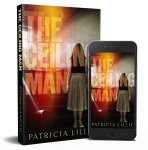 Neither of the above are affiliate links and I get nothing (other than the enjoyment of reading and a severe case of envy because I really want to write a gothic ghost story myself) out of them. I just think you should read the books. However, in the self-interest category, the Kindle edition of my novel
 Patricia Lillie